Am I Masking? Understanding Autistic and ADHD Masking
"I feel like I'm performing all day… and then I get home and crash."
Rocky Pellegrino - 28/07/2026
7 min read
Am I Masking? Understanding Autistic and ADHD Masking
"I feel like I'm performing all day… and then I get home and crash."
It's something I hear regularly from autistic and ADHD clients - children, teenagers and adults alike.
Parents often tell me their child "copes well" at school but falls apart at home. Adults describe feeling like they're constantly acting, carefully monitoring every word they say, every facial expression they make, and how they move through the world. By the end of the day, they're exhausted, yet people around them have no idea how much effort it took just to get through it.
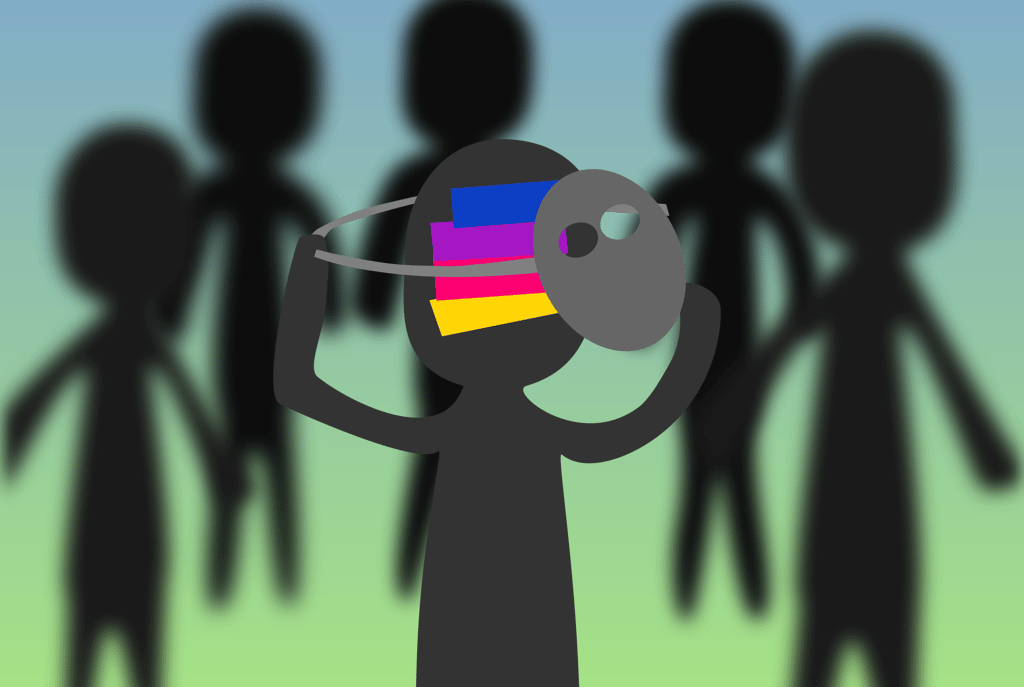
This experience is known as masking.
Over the past few years, masking has become a much more widely recognised part of many autistic and ADHD people's lives. While the strongest research exists in autism, we're also learning that many people with ADHD, and especially those with both autism and ADHD (AuDHD), mask in ways that can have a significant impact on wellbeing.
Understanding masking isn't about encouraging people to stop adapting altogether. It's about recognising why it develops, what it costs, and how we can create environments where people don't feel they have to hide who they are just to belong.
What is masking?
Masking (sometimes called camouflaging) refers to the conscious or unconscious ways neurodivergent people adapt their behaviour in order to fit into environments that weren't designed with them in mind.
For some people, masking is very deliberate.
They might think:
"Remember to smile."
"Don't talk too much about my interests."
"Look people in the eyes."
"Don't fidget."
Others have been doing it for so long that they don't even realise they're doing it anymore.
Masking isn't about being dishonest or pretending to be someone else.
It's about learning, often from a very young age, which parts of yourself seem to be accepted - and which parts attract criticism, bullying, exclusion or misunderstanding.
Like many survival strategies, masking develops because it works.
At least for a while.
Why do people mask?
Human beings are wired to belong. Children quickly learn which behaviours lead to praise and which lead to correction. Many autistic and ADHD children receive thousands of subtle (and sometimes not-so-subtle) messages throughout childhood:
"Sit still."
"Stop interrupting."
"Don't flap your hands."
"Look at me when I'm talking."
"You're too loud."
"You're too sensitive."
"Calm down."
"Just try harder."
"Everyone else can do it."
These messages aren't always intentionally unkind. Teachers, parents and peers are often doing their best. But over time, many neurodivergent people begin to wonder whether acceptance depends on hiding parts of themselves.
Research consistently shows that masking is strongly influenced by social context and stigma. People generally report masking more in environments where they feel judged, misunderstood or different, and less when they're with accepting people or other neurodivergent individuals.
In other words...
Masking usually says more about the environment than it does about the person.
What masking can look like in autism
Every autistic person is different, but common examples include:
forcing eye contact despite discomfort
copying other people's facial expressions
rehearsing conversations beforehand
carefully monitoring tone of voice
suppressing stimming
hiding sensory discomfort
pretending to understand social situations
laughing when everyone else laughs
avoiding talking about special interests
forcing themselves into social situations that leave them exhausted.
From the outside, someone may appear socially confident.
Internally, they may be analysing every interaction, worrying whether they said the wrong thing, and trying to remember the "rules" they have learned over many years.
Many autistic adults describe feeling as though they are constantly acting in a role.
What masking can look like in ADHD
Masking in ADHD often looks a little different.
Rather than hiding autistic communication differences, many people are trying to hide executive functioning challenges or emotional differences.
This might include:
pretending to be organised
over-preparing to avoid forgetting something
staying silent to avoid interrupting
sitting on hands to stop fidgeting
arriving excessively early because they're worried about being late
hiding emotional reactions
apologising constantly
avoiding asking questions because they don't want to seem forgetful
working significantly longer hours to compensate for attention difficulties.
Someone may appear highly organised at work while spending enormous amounts of energy simply keeping everything together.
By the time they get home, there's very little left in the tank.
What about AuDHD?
People who are both autistic and ADHD often describe masking as particularly complex. They may be trying to suppress autistic traits while simultaneously working hard to compensate for ADHD-related challenges.
For example, someone might:
force themselves to stay still despite needing movement
suppress stimming while trying not to interrupt
carefully plan conversations while battling distractibility
hide sensory overwhelm while appearing emotionally regulated
constantly monitor how much they are talking.
Many AuDHD adults describe feeling like they're balancing two different sets of expectations at once.
Not surprisingly, this can become incredibly exhausting.
Is masking always conscious?
Not necessarily. Some people know exactly when they're masking. Others don't realise until they receive a diagnosis and begin reflecting on years of adapting. I've had adults tell me:
"I don't actually know which parts are me anymore."
That can be an emotional realisation. When you've spent decades adapting to fit expectations, it can take time to reconnect with what actually feels natural.
The hidden cost of masking
Masking often helps people navigate school, work and relationships. That's why it develops. The problem isn't that masking exists. The problem is when someone feels they must mask all the time in order to be accepted.
Research consistently links higher levels of autistic masking with:
increased anxiety
depression
chronic stress
exhaustion
lower self-esteem
feeling less authentic
poorer overall mental health.
Many autistic adults describe coming home and immediately needing silence, darkness or complete solitude - not because they dislike people, but because their brain has spent the entire day working overtime.
Parents often see this too.
A child may appear to "hold it together" at school before melting down at home. This doesn't necessarily mean they're choosing to behave differently with their family. Often, home is simply the place where they finally feel safe enough to let go.
Rather than asking,
"Why are they behaving worse at home?"
it can be more helpful to ask,
"How much energy did it take for them to get through today?"
"But everyone masks sometimes..."
This is true. Most people behave slightly differently depending on the situation. We probably all speak differently to our friends than we do in a job interview. That's a normal part of social life. The difference is often the amount of effort involved.
For many neurodivergent people, masking isn't just adjusting behaviour. It's constant self-monitoring. It's analysing every conversation. It's suppressing natural ways of communicating or regulating. It's wondering whether people would still accept you if they saw the real you.
That level of sustained effort can be incredibly draining.
You might be masking if...
You don't need to tick every box. But you may recognise yourself if you:
rehearse conversations before having them
mentally replay conversations afterwards
force eye contact even though it feels uncomfortable
copy how other people communicate
suppress stimming until you're alone
hide sensory discomfort
apologise frequently
avoid talking about your interests
carefully monitor how much you speak
feel completely exhausted after social situations
feel like people only know the "edited" version of you
aren't entirely sure who you are when nobody else is around.
Does masking mean someone isn't "really" autistic or ADHD?
Not at all. In fact, the ability to mask can sometimes delay recognition. Many people (particularly girls, women and people who are intellectually able) learn highly effective masking strategies from a young age.
From the outside, they may appear to be coping well. Inside, they're often carrying an enormous cognitive and emotional load. This is one reason why many people aren't diagnosed until adolescence or adulthood.
Diagnosis isn't based on whether someone appears autistic or ADHD on the surface.
It's about understanding the person's lifelong developmental history, underlying differences, and the effort it takes to navigate everyday life.
Should people stop masking?
This is where the conversation often becomes oversimplified. Masking isn't inherently "good" or "bad." Sometimes it's genuinely useful. Most of us adjust our behaviour in different situations. The goal isn't to never adapt. Instead, it's to ask:
Do I have places where I don't have to?
Healthy relationships are the ones where you don't need to constantly monitor yourself. Good schools are environments where children can regulate without shame. Supportive workplaces allow different communication styles, sensory needs and ways of working.
Rather than expecting neurodivergent people to become better at masking, perhaps we should be asking how our environments can become safer for authenticity.
How can parents, teachers and workplaces help?
One of the most powerful things we can do is reduce the need for masking in the first place.
That might look like:
accepting different communication styles
allowing movement and sensory regulation
recognising that eye contact isn't the same as attention
valuing authenticity over conformity
responding with curiosity rather than correction
providing predictable routines where possible
creating environments where mistakes aren't met with shame
respecting recovery time after demanding social situations.
When people feel psychologically safe, they generally don't need to work so hard to hide who they are.
A final thought
If you've recognised yourself in this article, I want you to know this:
There is nothing wrong with you because your brain learned how to survive.
Masking often develops because it helped.
It may have protected you from bullying, helped you keep a job, allowed you to make friends, or simply made it easier to get through school.
Your brain adapted to the world around you.
The question isn't whether you should throw away every mask overnight. Instead, perhaps ask yourself:
Who are the people that allow me to breathe a little easier?
Where are the places where I don't have to perform?
Because authenticity isn't about removing every mask. It's about having spaces where you can safely put them down.
References
Alaghband-Rad, J., et al. (2023). Camouflage and masking behavior in adult autism. Frontiers in Psychiatry.
Bradley, L., et al. (2021). Autistic Adults' Experiences of Camouflaging and Its Perceived Impact on Mental Health.
Chapman, L., et al. (2022). I want to fit in… but I don't want to change myself fundamentally.
Cook, J., et al. (2021). Camouflaging in autism: A systematic review. Clinical Psychology Review.
Evans, J. A., et al. (2023). What You Are Hiding Could Be Hurting You. Autism in Adulthood.
Hull, L., et al. (2020). Cognitive Predictors of Self-Reported Camouflaging in Autistic Adolescents. Autism Research.
Lei, J., et al. (2024). Psychological Interventions for Autistic Adolescents with Co-Occurring Anxiety and Depression.
Maeda, C., et al. (2026). A narrative review of stigma and masking in ADHD.
Miller, D., et al. (2021). "Masking Is Life": Experiences of Masking in Autistic and Nonautistic Adults.
Pavlopoulou, G., et al. (2025). Upsetting experiences in the lives of neurodivergent young people.
Pearson, A., et al. (2020). A Conceptual Analysis of Autistic Masking.
Pryke-Hobbes, A., et al. (2023). The workplace masking experiences of autistic, non-autistic neurodivergent and neurotypical adults.
Putten, W. J., et al. (2024). Is camouflaging unique for autism? Autism Research.
Scheeren, A. M., et al. (2025). Masking, social context and perceived stress in autistic adults.
Sedgewick, F., et al. (2022). Autism and Masking.
Wurth, P., et al. (2025). Diagnosis acceptance, masking, and perceived benefits and challenges in adults with ADHD and ASD.
Affirmative Minds Psychology
Affirming identities and amplifying voices for a brighter tomorrow.
© 2024. All rights reserved.
Affirmative Minds Psychology is a neuro-affirming psychology clinic in Watsonia, offering counselling, therapy and assessments for children, teens, adults and families. We support clients across Bundoora, Greensborough, Macleod, Rosanna, Heidelberg, Viewbank and Melbourne’s northern suburbs. Services include ADHD assessment, Autism assessment, child psychology, adult psychology, couples counselling, cognitive testing and animal-assisted therapy.
Affirmative Minds Psychology acknowledges the Wurundjeri Woi-wurrung people as the Traditional Custodians of the land on which we work and live. We pay our respects to their Elders past, present and emerging, and honour their continuing cultural and spiritual connection to the land, waters, and community.
Affirmative Minds Psychology celebrates, values and includes people of all backgrounds, genders, sexualities, cultures, bodies and abilities.